
What Is a Paebaek? A Guide to the Korean Wedding Tea Ceremony
The paebaek (폐백, also spelled pyebaek) is one of the oldest and most loved traditions in a Korean wedding. It is the moment when the newlyweds pay their respects to their parents and elders, and the families send them off with blessings, gifts and a lot of laughter. Here is what it means, how it has changed, and what happens from the first bow to the last date.
Where the tradition comes from
Traditionally, the paebaek was held for the groom's side of the family. The new bride and groom would pay their respects to the groom's parents, elders and relatives as the bride entered her new wedded family.
How we celebrate it today
A wedding is the union of two families, so in modern paebaek ceremonies we like to invite both sets of parents and elders to take part. Everyone gets their moment with the couple, and guests love watching it.
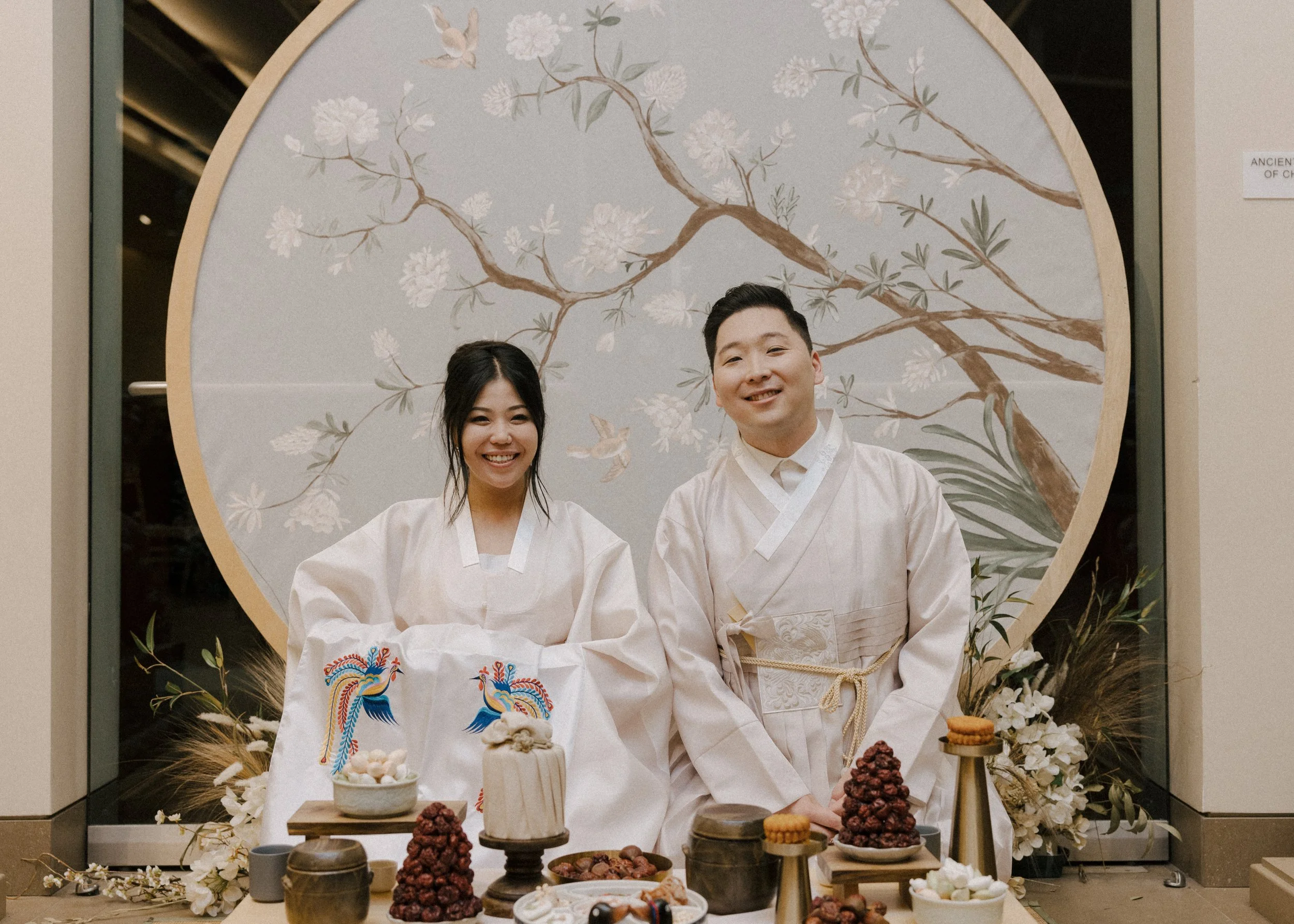
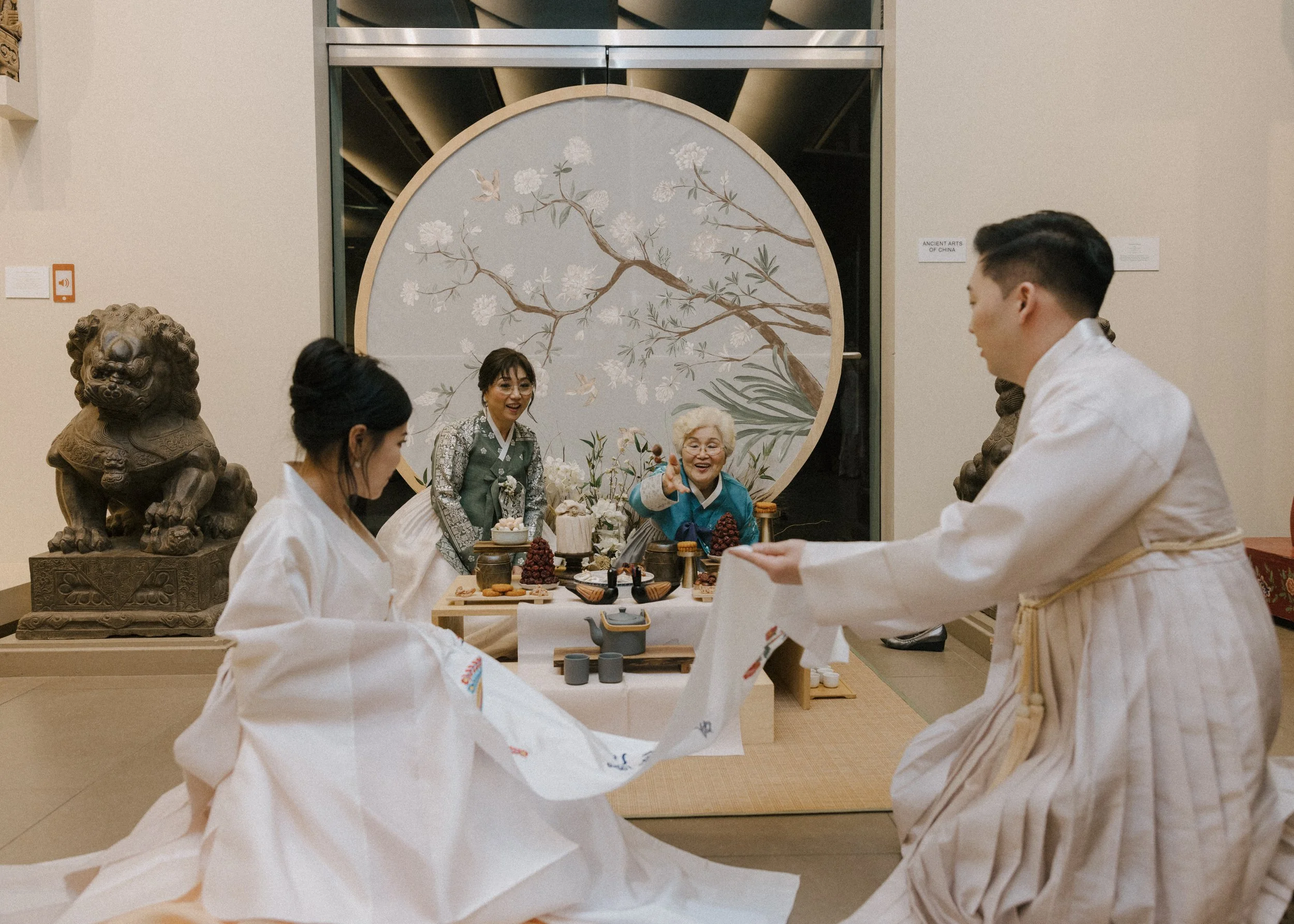
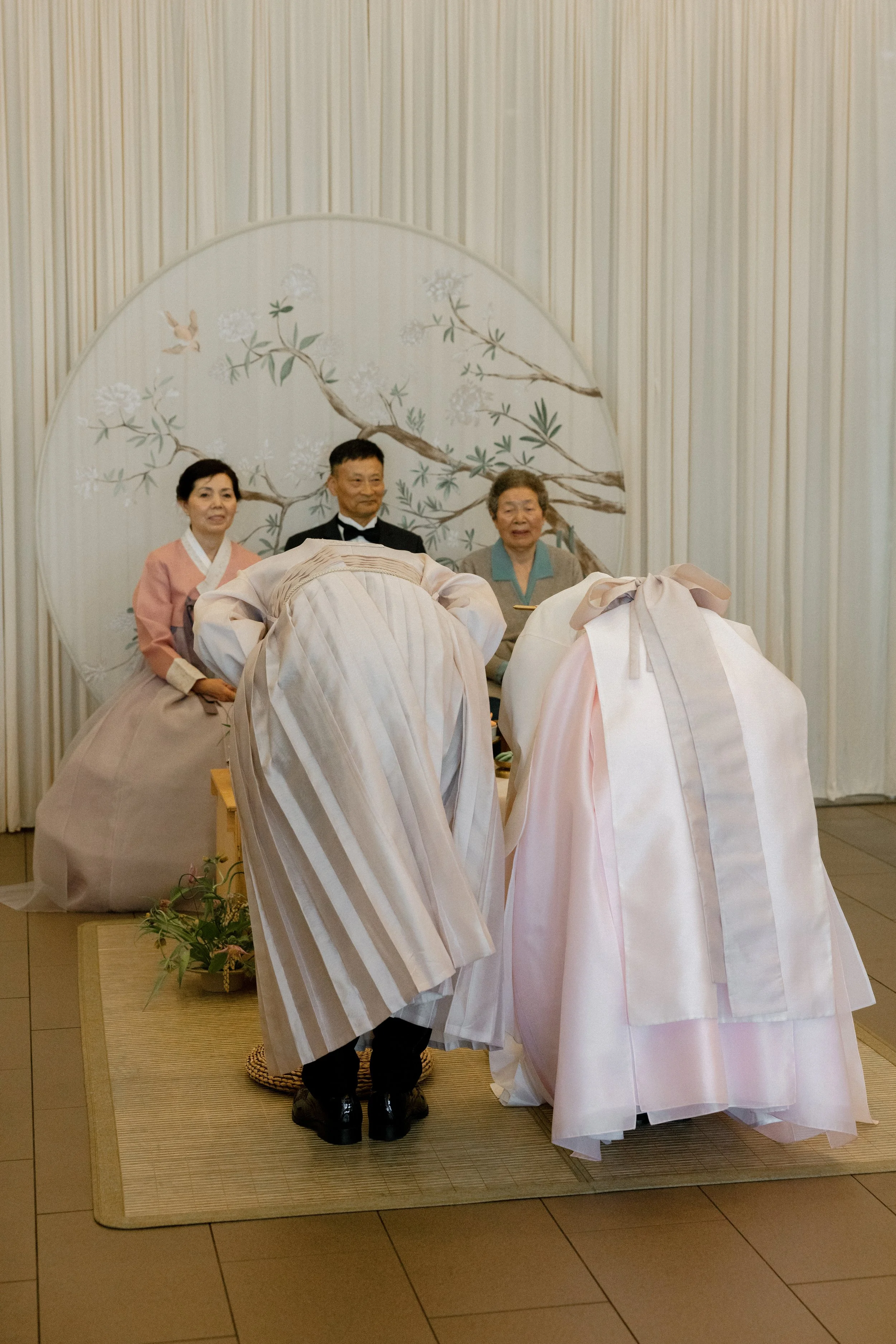
What happens during a paebaek
Bowing and tea service. The couple pays their respects by bowing to their parents and elders, then serving them tea.
Gifts and words of wisdom. In return, the family members give the couple gifts and share words of wisdom for their marriage.
Catching the dates and chestnuts. At the end, the parents toss dates and chestnuts toward the bride and groom, who try to catch as many as they can in their cloth. The number they catch represents how many children they will have. Chestnuts are girls and dates are boys, because a date has a seed inside.
The piggyback. Next comes a fun moment just for the couple: the groom carries the bride piggyback in front of the family and guests. He is showing off his physical strength, but it means much more than that. It is his promise to be the strength for his future family in every way: physically, mentally, financially and in any other way they need.
The date seed. Last is the contest for the seed of a date. Whoever ends up with the seed wedged between their teeth wins, and the winner is said to be the one who will wear the pants in the family and lead the household.
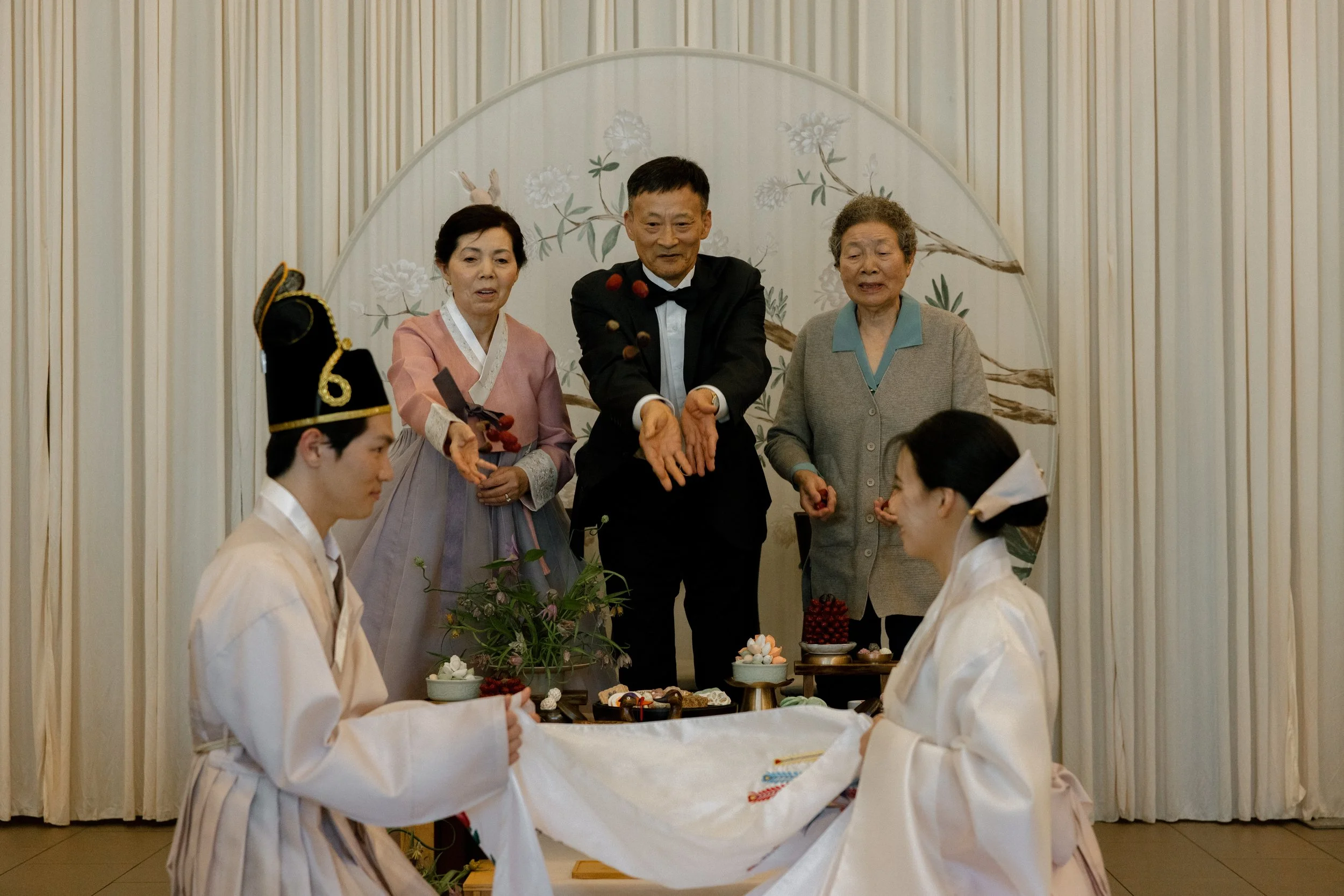
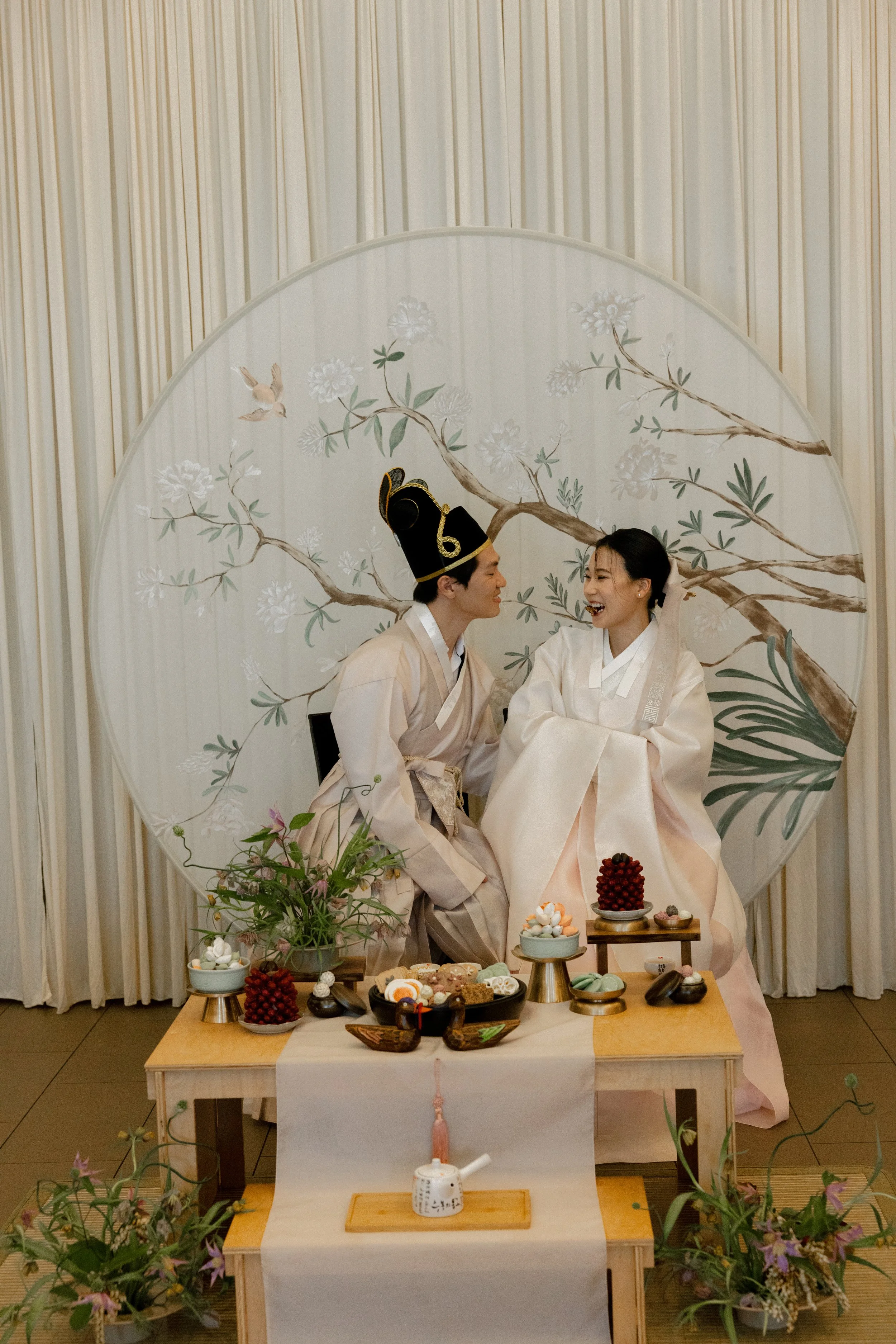
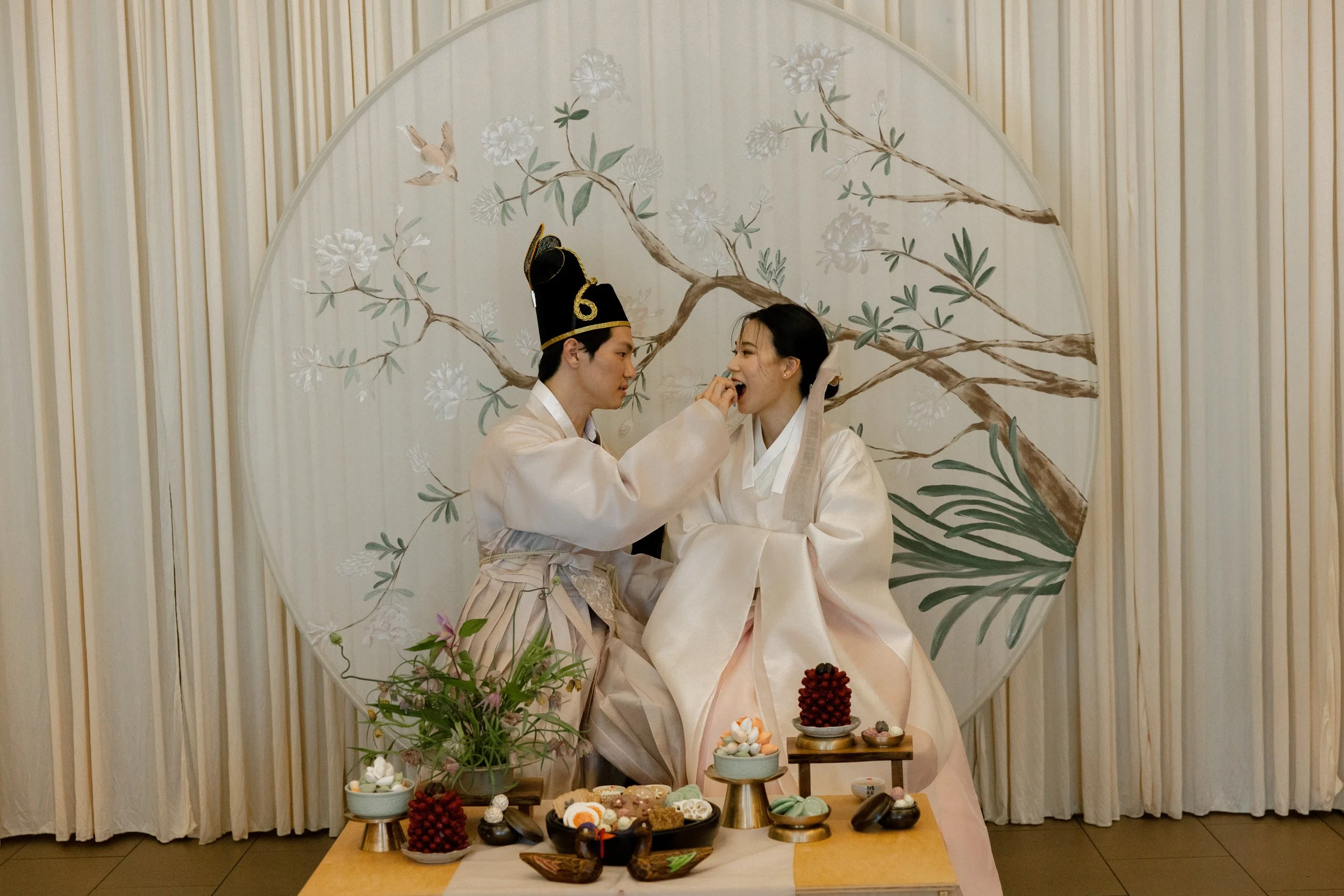
Our paebaek service
Live.Love.Create Events offers a modern, all-inclusive paebaek service, so the bride and groom can hand all of the planning over to us. Our home base is in Los Angeles and Texas, but our sets are mobile, so we can travel worldwide. Our sets are hand built and hand painted by our founder, Christine. The service includes the hand-painted backdrop with florals, paebaek tables with all décor items, outer paebaek robes for the bride and groom, and a moderator who leads the ceremony from start to finish. We speak both English and Korean, so the ceremony is bilingual.
Thinking about adding a paebaek to your wedding day? Contact us and tell us about your celebration. Planning questions? See our paebaek FAQ.
Photo credits: Minoru (@by.minoru), @thehavenkim